Space and Place in Regional History Studies – Methods and Historiographies
A concise overview of the research focus
The application of different research methodologies in doing regional history studies on themes and phenomena, as well the outcome/culmination of these studies in the historiographical repertoire of specifically ( though not exclusively) the Far West Rand region, forms the core focus in the dissemination of research in publications. A modern version of the Skipp model on studies in micro and macro spaces, and current explorations on spatiality as paradigm in conducting research in regions, are emphasised.
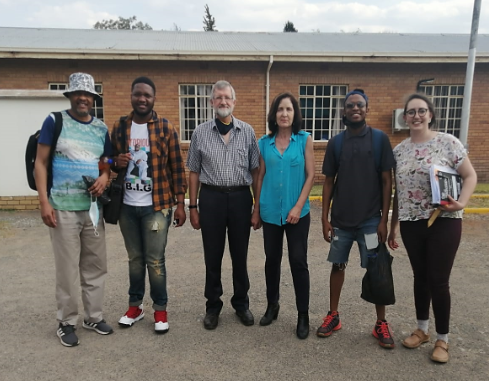
Taung Regional Studies — Revilio visit, September 2021, with postgraduate students.
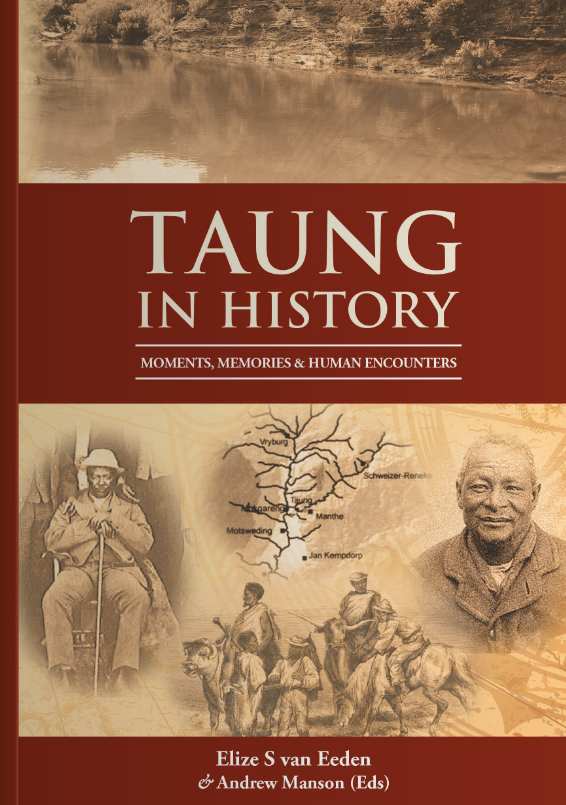
FEATURED PUBLICATION
TAUNG IN HISTORY
Moments, Memories & Human Encounters
A rich historical exploration of Taung, bringing together archival insight, local narratives, and human stories across time.
This eBook offers a deeper understanding of the people, places and moments that have shaped a remarkable region.
Published articles
(click to expand or collapse article sections )
Methodologies in doing regional history
Historiographical contributions in doing regional history
Book contributions
Cape Town: AOSIS, December 2025, pp. 1–35.
ISBN 978-1-997449-19-5.
DOI: 10.4102/.
Cape Town: AOSIS, December 2025.
ISBN 978-1-997449-19-5.
DOI: 10.4102/.
Pretoria: Bontshi, December 2024, pp. 1–38.
ISBN 978-1-03-701224-2.
Pretoria: Bontshi, December 2024, pp. 81–114.
ISBN 978-1-03-701224-2.
Community Engagement Research in South Africa: Methods, Theories, Histories and Practice.
Van Schaik Publishers, 2022, pp. 195–220.
ISBN 9780627037931.
ISBN 978-0-7969-2605-0, April 2021.
Nova Science Publishers, USA, July 2012.
ISBN 978-1-62100-001-3, 457 pp.
ISBN 978-1-86822-588-3.
Image gallery


Journal editorship
Regional History Conferencing South Africa
First Regional History Symposium in South Africa (27 November 2015)
I have no doubt that the dream to consolidate research on regions in South Africa in some way as part of their activities, is what the Regional Division of the Institute for Historical Studies had in mind when they started their research in 1975-1976. The establishment of the Journal Contree in 1977 was but one of the first steps as part of several goals that the researchers of the Regional Division at the Human Science and Research Council (HSRC) had in mind. Eventually, however, financial restraints and internal transformations and whatever else may have been part of the many reasons for closure did not allow for such a dream to germinate.
The 27 November 2015 Symposium on Regional History was and remains an effort to pick up some of the intentions that researchers of regional history studies had some 40 years ago; yet, this time, in a re-demarcated space (geographic area) and a changed spirit of place (internalised home) and its people, as well as a host of new dimensions of thoughts with regard to ways of approaching historical research, such as the social history dimension in regional history studies.
Doing structured and constructive historical research on local areas and broader districts and nationally declared regions at some stage seems to have weighed far less than researching specific phenomena from a favoured paradigm: phenomena like violence, poverty, racism, class distortions and capitalism. It does not imply that research in all of these respects was and still is not necessary, but the history of regions involves more than that. For this reason, a recording of the full spectrum of the development of a region cannot be overlooked, since all form part of the soul of any region (whether from an inevitable demarcated border area or a borderless paradigm), and as such requires the attention of historians together with several other layers of histories associated with regions that contribute to the regional make-up.
Furthermore, the mere possibility of doing all-inclusive research on spaces and places in any specific field of interest, or a required research necessity of the day and done by a multiple selection of disciplines, also got some researchers excited. However, exploring theories and methodologies in integrative disciplinary forms of research on a regional and micro level still has some way to go to be properly approached and academically appreciated. In recent times, research with regard to people’s sense of home (“homeyness”) has also received some research attention during the 1st Regional History symposium. The Finnish historian, Prof. Sulevi Riukulehto was invited to South Africa in 2015 to share his experiences concerning the concept of “homeyness” and to theoretically deliberate on his 2015 publication Between time and space, in which the importance of space in regional historical research is contemplated on. As a result of all these fascinating trends and in addition to the long-standing need to pick up some past discussions on regional histories (especially on a national level, yet certainly not exclusively so), it was decided to organise a symposium for regional history in South Africa ( see symposium programme).
Currently a relationship with the Sedibeng municipality is negotiated to ensure research by post graduate students on the region and to search for support on the initiatives and focus of the annual Regional History Studies Symposium.
Proff-A-Grundligh-Elize-van-Eeden-and-Sulevi-Riukulehtu-at-the-1st-Regional-History-Symposium-Nov-2016
~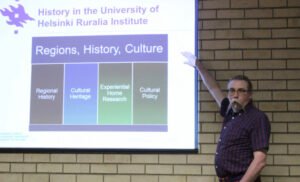
Prof-Riukulehto-keynote-Regional-History-Symposium-South-Africa-Nov-2016
~~
Participants-at-the-Regional-History-Symposium-Nov-2016
Second regional history symposium (25 Nov 2016)
...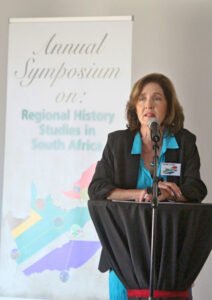
Elize S van Eeden welcoming attendees at the 2nd regional history symposium (25-nov-2016)
~~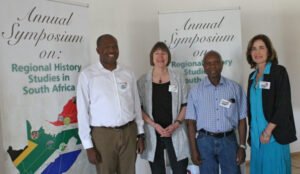
Prof Elize van Eeden – with keynote Prof Cheryl Walker and Prof Bernard Mbenga and Mr Vusi Khumalo
~~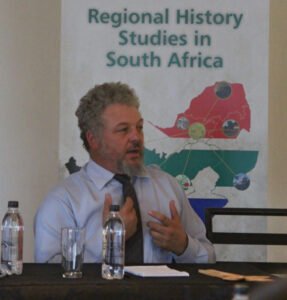
Eric Stoch discussing the home project in Merafong far West Rand
Regional History Conference, Nov 29, 2021
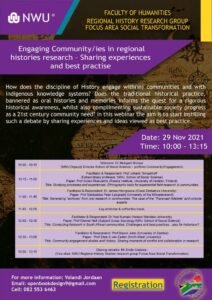
Regional-History-Conference-Nov-29-2021
...
Regional History Webinar Mon, Nov 29, 2021
https://youtu.be/rkrt6yWFdb8?si=dsaDaTINnH3halZQ
International connections

Prof Sulevi Riukulehto
Helsinki, Finland
Apart from engaging in regional history theory since 2014, Prof Riukulehto has also been involved in a project on community experiences of homeyness in the Merafong region, following his visit to South Africa in 2015. Extensive fieldwork was undertaken, from which research dissemination was expected to follow during 2016–2017.
Prof Riukulehto also delivered the keynote address at the 1st Regional History Studies Symposium in 2015.